Disclaimer: It is important to note that STABILISE is a work in progress operated by an educated woman with lived experience with bipolar disorder and computer scientists interested in improving access to practical knowledge, medical professionals, and crisis responders. We are building a mobile application that is designed to track moods and analyse text so help can be provided sooner. For medical advice, please consult your family doctor or a trusted health care practitioner. If you believe you are in need of immediate medical assistance and live in North America, call 911. Otherwise, please reach out to the Lifeline at 988 (by phone or text).

Tag: Self-Help

  • On the Visceral

    In her book, The Secret History, Donna Tartt writes,

    “Beauty is terror. Whatever we call beautiful, we quiver before it.”

    The act of quivering before anything implies that the person has been affected deeply. To be affected by an experience can be visceral, a word defined by Merriam-Webster as “felt in or as if in the internal organs of the body.” People can experience beauty and terror in many ways. For some, it is religious or spiritual in nature. For others, it is being in the presence of nature or a brilliant piece of art.

    Another interesting definition of visceral is that it is “not intellectual,” but rather, instinctive or relating to what a person feels in their gut. This instinctive, gut-level response is not limited to beauty or terror — it is also how emotions can manifest into mental states like mania and depression. Both are extreme states in which emotions are deeply felt, but can lack a rational framework. Communication with a trained professional or crisis responder is advised, as they can offer an objective interpretation of events and practical strategies, like exercises, techniques, or resources.

    When experiencing mania or depression, it is essential to ask: are my emotions grounded in truth? While it is valid to feel what a person feels, it is crucial to pause and verify whether the thoughts behind the emotions are rooted in reality. A visceral experience, whether of beauty or terror, can distort a person’s ability to gauge if their emotional experiences are proportionate to what is actually happening in the world.

    The power of Tartt’s prose is that she encourages the reader to contemplate deep philosophical questions. In mentioning the quiver, Tartt effectively illustrates how a person can be struck viscerally by an experience. By linking beauty with terror, Tartt captures the overwhelming intensity of such moments — and invites reflection on how to respond when we are caught off-guard by life’s rawest experiences. The challenge is not only to feel deeply, but maintain access to the rational part of ourselves that enables discernment.

    Source: Merriam-Webster
  • On Jewelry Making

    In her book, Women Who Run With the Wolves, Clarissa Pinkola Estés writes,

    “The Wild Woman knows that in creating, she claims her power. She reclaims what has been lost, forgotten, or silenced.”

    It takes courage and discipline to make art. It also requires research. I meant to write this blog post this morning, but I got wrapped up in reading different passages from female poets, novelists, and journalists. I was reading them because I needed inspiration. I came across the Wild Woman archetype, an idea explored by Clarissa.

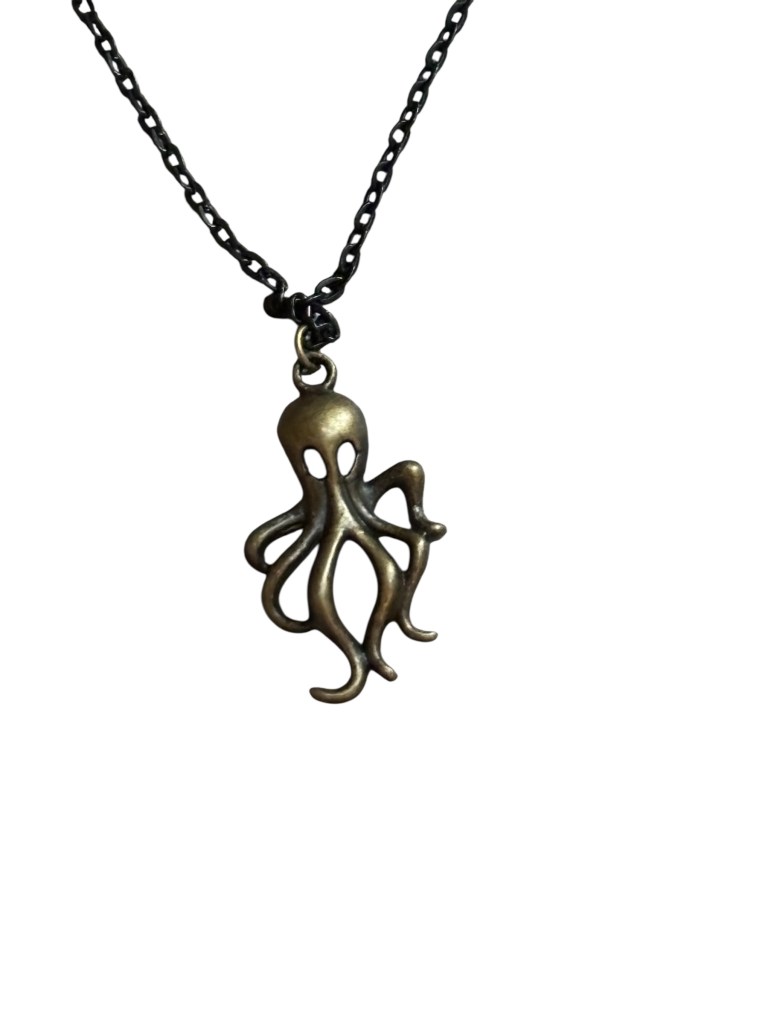
    Basically, the brunt of the book is an expression of how by accessing a woman’s intuition, she is able to express essential personal truths. In my work, I am interested in truth-telling and meaning-making. The primary reason why I make jewelry is because it is comforting to use my hands to create something that did not exist before I made it.

    There is something primal about art and creativity; namely, its capacity to contain and express multitudes. A beaded bracelet is not only beads slipped through an elastic string. It is an elucidation of a time – an event, an emotional experience, the inkling of an idea that came into fruition.

    I make jewelry because it allows me to stay focused, specifically when I am twisting eye hooks into little rings or figuring out exactly what a piece should look like. The physical component is what draws my attention. In writing, one typically says what one intends. Jewelry making is a way to channel an idea into a non-linguistic form, to give shape to intuition, and to reclaim a kind of personal power.

  • On Love

    In his book, The Symposium, Plato writes,

    “… each of us when separated, having one side only, like a flat fish, is but the indenture of a man, and he is always looking for his other half.”

    The Symposium is fundamentally a book about love, a series of speeches designed to encourage thought about what love means. The quote is from Aristophanes.

    I remember reading The Symposium for the first time during my undergrad. I was astounded by the variety of perspectives on love. I was particularly struck by Aristophanes and Socrates.

    In the book, Socrates advances the notion that love draws us closer to the divine. When we love one, we are encouraged to love the whole of humanity, which leads us to the divine circuit of virtues.

    He argues that when we love a single individual, we must admit that those qualities are not particular to that individual. Once conceded, we expand our perspective to include others, eventually ending up loving the virtues themselves. There is something gorgeous about his theories, if only because they encourage the reader to think deeply.

    The reason why I like Aristophanes take is because he emphasizes the impact of the search. Often enough, I feel as though I am searching for something. I no longer believe it is a person.

    Being a believer in God is difficult. It is not the act of believing that is difficult, but rather, the consistent worry that I will deviate from what is moral. To be moral is to live a good life, an Aristotelian idea. Well, it is a feature shared by the ancients. They were preoccupied with the question, What does it mean to live well?

    When I think about what it is I am searching for, I would say it is a profound sense of peace. I mean, the peace I saw when I was looking at my mother who passed away.

    At her funeral, I leaned over to my uncle and said, “She looks like she knows something we don’t.”

    I’ve never forgotten that. Two years and I still feel her breathing beside me.

    Maybe the love we search for, the missing half, are really our parents, our friends, the person we saw on the street once.

  • On Prayer

    In her book, Gravity & Grace, Simone Weil writes,

    “Absolutely unmixed attention is prayer.”

    I have not read the book in full yet, only snippets here and there. But Simone Weil appears to be a fantastic woman, full of genuine and thoughtful insights. I read that when she passed away, it was likely due to the fast she was doing in solidarity against the Nazi-occupied territories.

  • The Introduction

    Welcome to Stabilise.

    Stabilise is a human-led virtual project designed to emphasize the importance of meaning-making. It is about sharing different philosophical and psychological ideas with the hope of emphasizing how theoretical frameworks can provide clarity for emotional experiences.

    In our time together, I intend to write about what it means to be a human being in the world. I will write about nostalgia, how a single whiff of perfume can inspire a memory or a series of memories. I will discuss Emmanuel Levinas and his concept of the face-to-face encounter. I will explore intense topics, like death and how it feels to lose a parent. When doing all of these things, I will attempt to navigate through them with a philosophical lens.

    Ultimately, it is my goal to illustrate how philosophy and writing about ideas and emotions can strengthen one’s constitution long enough to stabilise.