Disclaimer: It is important to note that STABILISE is a work in progress operated by an educated woman with lived experience with bipolar disorder and computer scientists interested in improving access to practical knowledge, medical professionals, and crisis responders. We are building a mobile application that is designed to track moods and analyse text so help can be provided sooner. For medical advice, please consult your family doctor or a trusted health care practitioner. If you believe you are in need of immediate medical assistance and live in North America, call 911. Otherwise, please reach out to the Lifeline at 988 (by phone or text).

Tag: Self-Care

  • On Pursuing the Whole Picture

    On Pursuing the Whole Picture

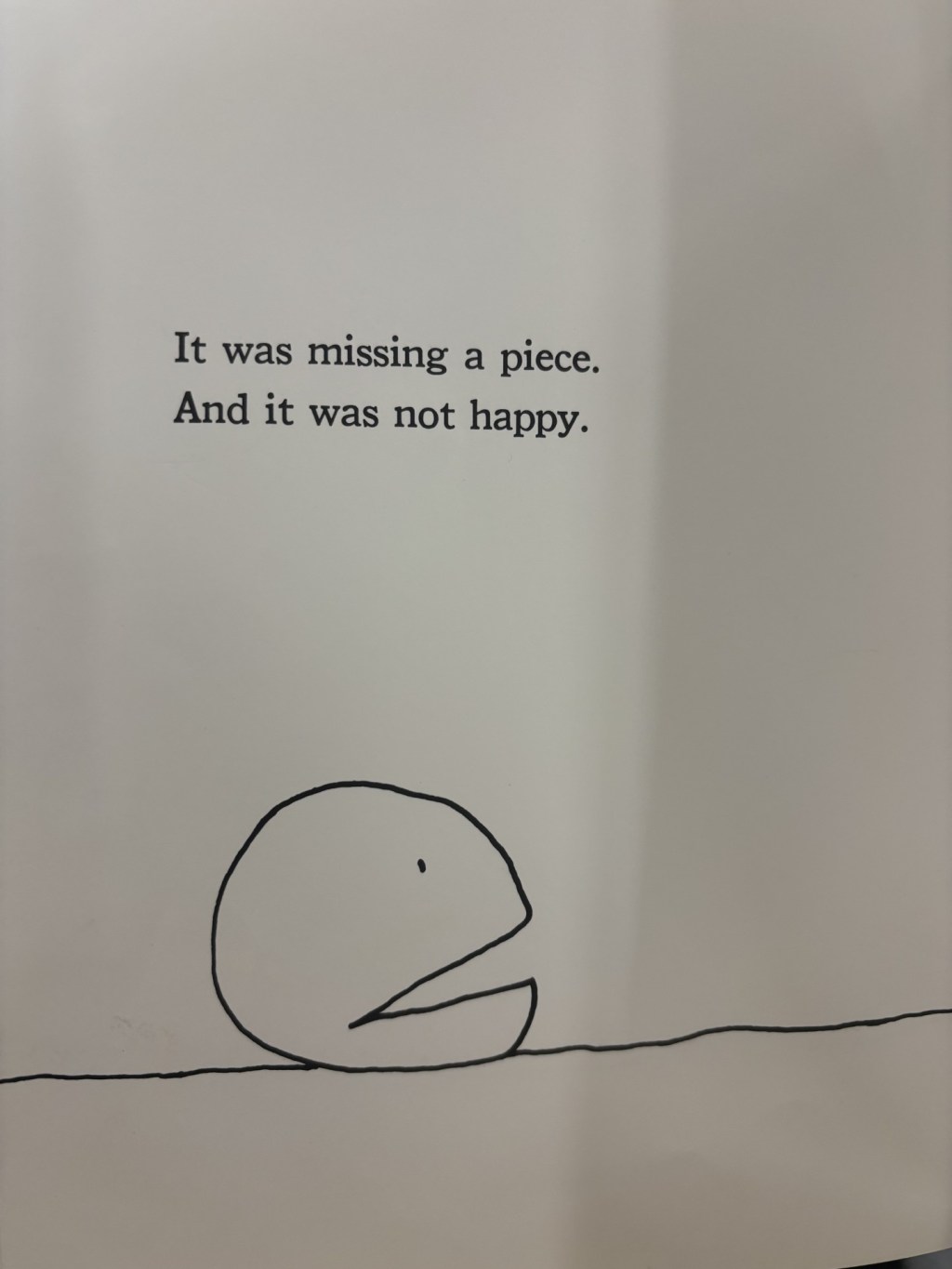
    Shel Silverstein, The Missing Piece

    If I were to ask you to imagine yourself as a landscape, what image would come to mind?

    In the past few days, I have been a stretch of cold similar to the Tundra. I have also been as volatile as the earth’s core.

    One minute, snow and ice. The next, molten iron and a variety of other elements.

    There is tremendous beauty in that versatility. My inner self can appear barren, void of everything but cold and wind. One blink and I become magma. The shift between the two is hopeful because it signals the potential for change. It also hints at how multifaceted human beings truly are.

    We are never just one thing, one idea, one side of the coin. And chances are, each of us has got a piece of us that appears to be missing.

    The beauty of reading children’s books as a woman in her 30s is that I can grasp subtleties while also activating my inner child. For the past few years, I have been obsessed with exploring my shadow self. It seems so mature to face the dark side, so elegant and sexy and deep.

    For a time, shadow work was an illuminating and essential process.

    I don’t know if I’m alone in saying this, but lately, I’ve been looking at my reflection and seeing the little girl I used to be. It helps that I have been navigating my fear of being on camera by taking selfie reels of me talking about some of the things I am thinking about.

    It also helps to read children’s books, like those written by Shel Silverstein and James & Kimberly Dean, because complex ideas are expressed with simple language.

    It’s that quest for simplicity that I crave, reminiscent of Richard Feynman who said that if it couldn’t be explained to a child, the person didn’t understand the concept well enough.

    The beauty of approaching inner child work is how it’s teaching me to approach my reflection with care and curiousity.

  • On Embodiment of Self

    On Embodiment of Self

    When I use the term embodiment, I am referring to the process in which an individual returns to and inhabits their body. It could be interpreted as grounding in the sense that it symbolizes the process in which a person recognizes their physical presence in the world.

    It is a vivid internal awareness of one’s body inhabiting time and space.

    I go for periods at a time feeling disconnected from my earthly body. It’s often caused by slipping away from a routine, overstimulation through consumption of information, and allowing myself to be paralyzed by various insecurities.

    I’m going to be honest:

    The digital world, at least social media, does not come easy for me.

    I often live inside my head. Philosophy is quite cerebral, as is reading, psychology, mental health, and so on and so forth. It takes a lot for me to venture out of the safety net of my brain’s capacity to store information.

    It takes a lot for me to approach my body.

    I don’t mean physical exercise in the form of cardio and lifting weights. I mean, mirror work. I’ve struggled with my reflection for as long as I can remember. I used to turn away from every mirror I could, electing to memorize the curves of my body and face so I didn’t have to look at them.

    I still do that sometimes, but this week, something different happened. I was recording a video with my supervisor for a business venture. Given the serious nature of our work, I took the time to observe myself speak and move and look directly into the camera.

    As it turns out, I am not a mutant spaceship alien, and if I am, I give the impression of appearing human very well.

    I went home. I cooked. I stepped into my studio office space, set up my phone, and took one video after another of myself talking. I watched the way my eyes move, floating from here to there as I located the words that fit the meaning of what I was trying to say.

    It was humbling and beautiful to see my imperfect self growing more comfortable as time went on. I noticed the curve of my neck, the place where my glasses settle, how I tend to smile from one corner of my mouth.

    It was a powerful experience and a lesson on what it means to seek embodiment.

  • On Self-Development

    On Self-Development

    A very dear friend of mine and I went to Muskoka, Ontario for the weekend. We walked into the Walmart and there was a photo development center through the entrance on our left. It brought to mind memories; namely, how many disposable cameras I used to bring in to photo labs when I was young.

    When I was young, I loved quite fiercely. I loved the skies, trains, mountains, forests, billboards, tracks, getting on a plane and heading somewhere for an indeterminate amount of time.

    Time has become a dark room.

    I am thinking about the clouds we saw on our trip and the clouds I saw at a haunted house later. They were moving quickly, shapeshifting in grey sky before drifting into a dark night.

    I am drenched in memories, both near and far.

    I returned home. I swept the floor before mopping. I rearranged the furniture. There is a new leaf on the ficus. I hung the pothos on thumbtacks along the wall.

    New patterns, new modes of being.

    I got up to clean the toilet, sprayed bleach on the dark brown stain in the sink from the hair dye I applied two weeks ago. I thought about a person I knew who reached out in the thick of spontaneity and ended us by saying, “You haven’t changed.”

    I thought of the tailspin of loss — how we can want what isn’t good for us, how we can want what makes us sick. Head spinning, ghastly shadows, and still we want until we train our minds in the shape of our bodies.

    This here, that there — wooden picks delineating space.

    I get up. I sit down. I look at the watermelon quartz pendant I attached to a black chain. I look at the paint on the canvas, the dollar store sponges that are waiting to be rinsed.

    I look at the evidence of a life and I notice that it’s mine.

    This here, this is self-development.

  • On Loneliness

    On Loneliness

    In his book, A History of My Brief Body, Billy-Ray Belcourt writes,

    “Let’s start with the body, for so much is won and lost and lost and lost there.

    I was lonely once and that was all it took. A thick haze, a smothering opacity, this was the loneliness of feeling estranged from one’s body and, by extension, the world.”

    It astounds me how certain books arrive at the right time.

    It can be easy to think that one is alone with their thoughts, but a distinctive part of becoming an integrated human being is realizing that the majority of us share the experience of loneliness.

    It is a profound feeling, one that reverberates through the body. It is a sacred calling for an honest answer, one that sets the brain ablaze in search of the questions that are being asked.

    Am I enough? Am I enough as I am? What does being enough mean?

    – Samples

    It is sacred work to attempt to discover the questions and answers for one’s self. I don’t believe there is a single response. Rather, I believe the answers fluctuate depending on the times in which the questions are being asked. The objective may be to recognize that truths echo through one’s frame in an intuitive form of knowing.

    The confusion is the desire that stems from loneliness or an equivocal feeling. Hence, the persistent emphasis on meditation and the powerful effects of grounding. To return to the earth is to return to the body. It is to gain the capacity to name loneliness without trying to eradicate it.

    Let the world be what it is. Let yourself be in the world as you are. Loneliness only seems to carry a stench when it leads you to sacrifice your morals and principles. Hence, the persistent emphasis on forming intentions and setting a schedule and learning the power of self-discipline.

    Control thyself — or learn how to pause before acting on an impulse. Act on the impulse anyway to learn the difference between doing and not doing.

    Reading Belcourt’s memoir reminds me how veracious we can be when we offer ourselves the time to examine why we do the things we do. You, dear reader, must be familiar with the sort of doing I am mentioning: the unmentionable acts, the times we contort our physical bodies into shapes beyond our comprehension and recognition, the willful negligence of self in the name of self-expansion. When the self is lonely, it is hard to see clearly.

    Loneliness, in and of itself, is not negative. It carves a space, one in which it is possible to interrogate what to do with the absence and the excess. Self-expansion can often look like self-destruction in the before.

  • On Self-Compassion

    Today, I would like to perform an excavation.

    I have lived with crippling self-doubt for too long and I would like it to end.

    As this idea simmers in my mind, I am reminded of Kristin Neff’s work on self-compassion. Reading her work has been a pivotal part of my journey because she teaches her readers how to counter negative thoughts with compassion that is directed inwards.

    I am an extremely self-critical person. Not just sometimes, but practically everyday at regular intervals. It helps to say that out loud. I am critical. I am mean. I am mean to the point where I self-sabotage relationships and experiences.

    Neff writes,

    “We can’t always get what we want. We can’t always be who we want to be. When this reality is denied or resisted, suffering arises in the form of stress, frustration, and self-criticism. When this reality is accepted with benevolence, however, we generate positive emotions of kindness and care that can help us cope.”

    She raises two important questions:

    1.) What do you want?

    2.) Who do you want to be?

    They give me pause.

    I want to be at peace in my head. I want to be a confident and intelligent woman. I want to get my Masters in Philosophy. I eventually want to get my PhD. I want to learn how to love people well and wisely. I want to be kind and thoughtful and considerate. I want to stop wanting to disappear from people’s lives whenever my emotions grow large.

    God, it feels so good to admit all of that, and that’s barely scraping the surface of my wants. But in reference to what she wrote, there are moments when I will not be what or who I want. I will be unkind and inconsiderate and pretentious. I will say stupid things and not read an article carefully enough. My research will be misguided and I will make false assumptions. I will tell someone I care about, “I want to disappear from your life.” I may not get into grad school.

    And I will survive.

    I will survive because I am not a static entity. I am a consistently evolving human being who is capable of tremendous growth and genuine progress. When I wanted to go to college at 35, I doubted my intellectual capacity. I went anyway. I thrived. I met people who will be my friends for the rest of my life. I moved provinces. I shifted my entire life in the direction of a single dream: get educated and strive towards a better life.

    If that is not a signal fire for hope, I am not sure what is.

    I deserve to offer myself compassion because imperfection is a human condition. A constant preoccupation with efficiency is the enemy of magic. I am allowed to love myself fiercely in the face of my misgivings and shortcomings because I am also wonderful.

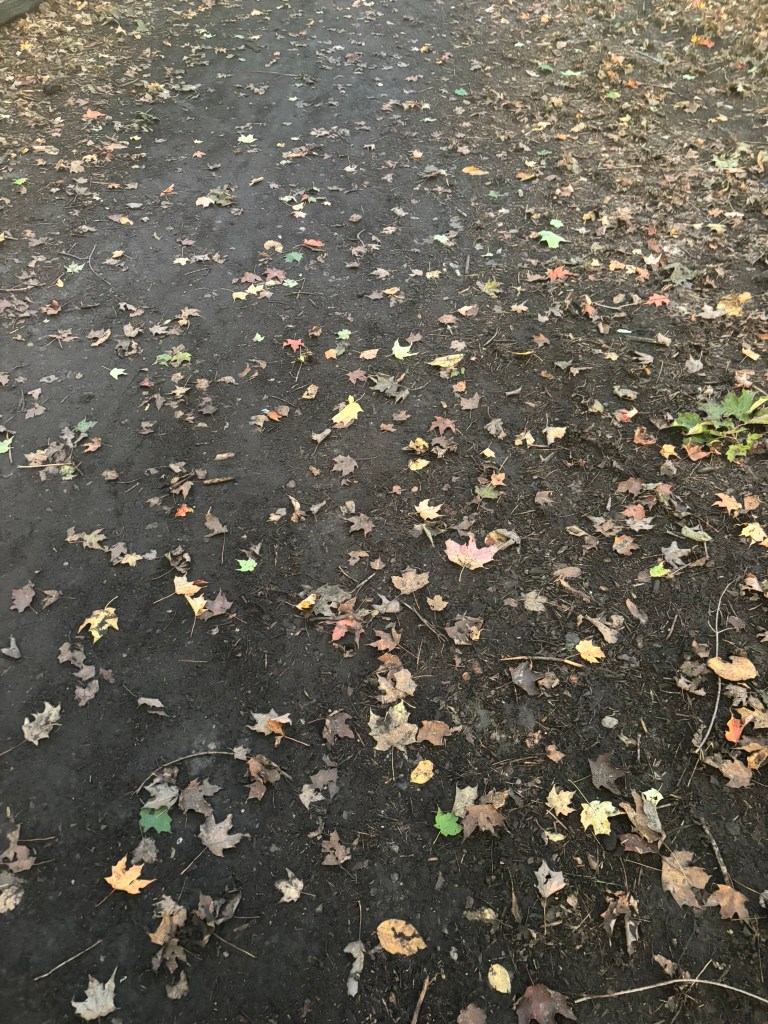
    Here’s to dipping out of work early to enjoy the October sun and hear the pleasant crunch of leaves underneath my sneakered feet.

  • On the Long Road

    Michel de Montaigne, a French philosopher from the Renaissance, said,

    “To practice death is to practice freedom. A man who has learned how to die has unlearned how to be a slave.”

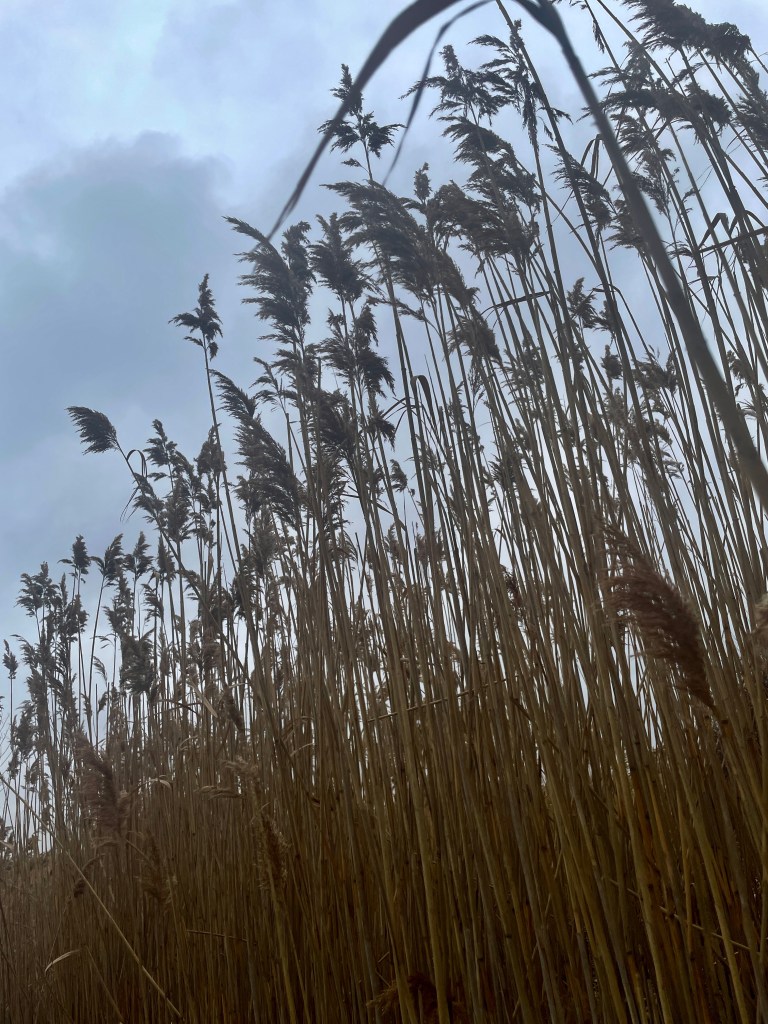
    I chose Michel’s words and the picture because death has been weighing heavy on my mind. Pampas grass grew outside the townhouse I lived in with my mother right up until she passed away. There are moments when I feel her presence near, when I think communicating with her would be as simple as picking up the phone.

    I remember her daily.

    I hear her voice in my head, not as a symptom, but a painful sense of missing someone I love who is no longer here. A professor I write to every once in a while told me that it is a strangeness to lose the person who brought us into this world.

    Strange is right, hollow too.

    At root, what I’d like to tell her is about my day. At heart, I want to hear about hers. The afterlife of loss is profound. There are instances when my soul lurches and pivots and does cartwheels.

    I think about what Michel is saying, how he emphasizes the importance of accepting one’s mortality. It isn’t strictly acceptance, but a relinquishing of the fear that can help us avoid becoming subservient.

    I know that I feel subservient to my own fear of death. The unknown is terrifying with its unseen variables. However, I have noticed that my fear of death is in proportion to the excitement I feel learning how to engage with the world again.

    Everyday, I grow more confident, a skill that I have been trying to manifest since I was a kid.