Disclaimer: It is important to note that STABILISE is a work in progress operated by an educated woman with lived experience with bipolar disorder and computer scientists interested in improving access to practical knowledge, medical professionals, and crisis responders. We are building a mobile application that is designed to track moods and analyse text so help can be provided sooner. For medical advice, please consult your family doctor or a trusted health care practitioner. If you believe you are in need of immediate medical assistance and live in North America, call 911. Otherwise, please reach out to the Lifeline at 988 (by phone or text).

Tag: Reflection

  • On the Mother Wound

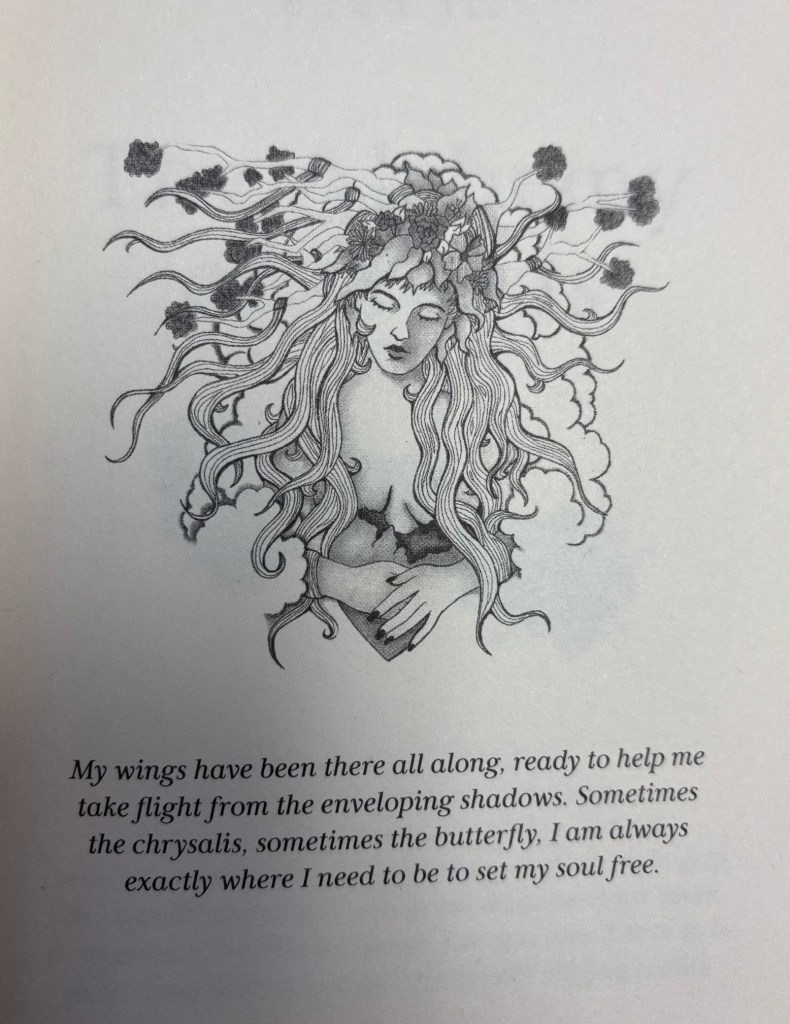
    I am reading a book written by Monika Carless called, Transforming the Mother Wound. Near the beginning, she writes that “self-healing or assisted healing consists of several steps,” one of which is “creating safe space to explore the trauma” (Carless, 10).

    I have been thinking about grief and the desire to disappear from people’s lives. When I was growing up, there were instances when my mother and I would get into disagreements and she would ask me if I wanted her to disappear.

    It is an intense and impactful question that is augmented by the fact that her physical frame has indeed disappeared through death.

    I appreciate John Locke’s popularized notion of tabula rasa, a Latin phrase for blank slate. Locke himself was one of the three great empiricists, a philosophical framework that posits sensory experience as our primary mode of acquiring information and knowledge about the world.

    When I was young, I learned that disappearing is an option. I learned how to ghost and leave people’s lives without a second glance. And yet, it is only now that I feel a strong urge to reprogram my way of thinking.

    The neuroplasticity of our brains means that this is possible. It is one thing to form a habit, another to pay attention to the moment when you are presented with the opportunity to choose a different action. It requires self-awareness, discipline, focus, and a willingness to change.

    Hard emotions demand brevity. I am learning how to stand still in the face of them. I am learning how to trust myself enough to know that even if the ground may shift beneath my feet, I will be okay. I am developing inner fortitude and the realization of control that I have over my own character.

    In this place here, I am learning how to take Carless’ advice and carve a space where I can explore what moves me. I have also started writing by hand in a beautiful journal that was gifted to me.

    My journey is the process of becoming.
  • On Nausea

    Years ago, I stumbled across a memorable quote from Jean-Paul Sartre’s book, Nausea:

    “It’s quite an undertaking to start loving somebody. You have to have energy, generosity, blindness. There is even a moment right at the start where you have to jump across an abyss: if you think about it you don’t do it”.

    It is interesting to consider the initial moment when you recognize there is the potential to love somebody. I am not strictly talking about romantic love, but platonic love as well.

    Vulnerability can feel scary. To put yourself out there, to drop your guard, to show up with an open heart – these are tremendous tasks.

    It calls to mind Kierkegaard’s conception of the leap of faith in his book, Fear and Trembling. This is a logical comparison given that both Sartre and Kierkegaard were continental thinkers.

    In Fear and Trembling, Kierkegaard talks about the leap of faith, a decision that separates the knight of infinite resignation from the knight of faith. Basically, the knight of infinite resignation is the one who doesn’t jump. He approaches the precipice and is paralyzed by its depth and the potential for danger. In comparison, the knight of faith is the one who knowingly makes the leap.

    What I am learning is how to practice awareness while appreciating love’s capacity to inspire joy, peace, and gentleness. There is value in letting somebody in long enough to get to know them. Some people are beacons of light and arbiters of hope. They walk with you on life’s journey.

    It is not a perfect venture. Love is messy. It makes demands. It asks questions, hard questions, the sort that encourage you to take a good, long look at yourself in the mirror. There are conflicts, crises of conscience, and requests for compromise.

    All is well though when you choose to make the leap for those who allow you to feel safe and heard. Love is a communion between two beings who are committed to showing up for each other with respect, integrity, and dignity.