Disclaimer: It is important to note that STABILISE is a work in progress operated by an educated woman with lived experience with bipolar disorder and computer scientists interested in improving access to practical knowledge, medical professionals, and crisis responders. We are building a mobile application that is designed to track moods and analyse text so help can be provided sooner. For medical advice, please consult your family doctor or a trusted health care practitioner. If you believe you are in need of immediate medical assistance and live in North America, call 911. Otherwise, please reach out to the Lifeline at 988 (by phone or text).

Tag: love

  • On Self-Development

    On Self-Development

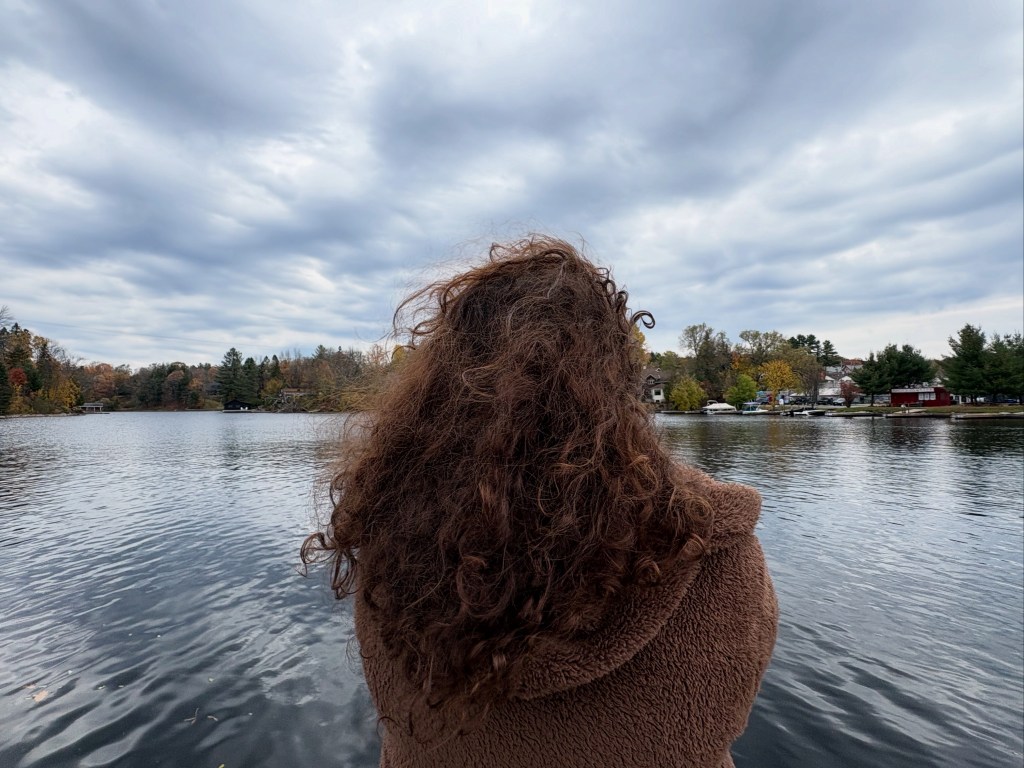
    A very dear friend of mine and I went to Muskoka, Ontario for the weekend. We walked into the Walmart and there was a photo development center through the entrance on our left. It brought to mind memories; namely, how many disposable cameras I used to bring in to photo labs when I was young.

    When I was young, I loved quite fiercely. I loved the skies, trains, mountains, forests, billboards, tracks, getting on a plane and heading somewhere for an indeterminate amount of time.

    Time has become a dark room.

    I am thinking about the clouds we saw on our trip and the clouds I saw at a haunted house later. They were moving quickly, shapeshifting in grey sky before drifting into a dark night.

    I am drenched in memories, both near and far.

    I returned home. I swept the floor before mopping. I rearranged the furniture. There is a new leaf on the ficus. I hung the pothos on thumbtacks along the wall.

    New patterns, new modes of being.

    I got up to clean the toilet, sprayed bleach on the dark brown stain in the sink from the hair dye I applied two weeks ago. I thought about a person I knew who reached out in the thick of spontaneity and ended us by saying, “You haven’t changed.”

    I thought of the tailspin of loss — how we can want what isn’t good for us, how we can want what makes us sick. Head spinning, ghastly shadows, and still we want until we train our minds in the shape of our bodies.

    This here, that there — wooden picks delineating space.

    I get up. I sit down. I look at the watermelon quartz pendant I attached to a black chain. I look at the paint on the canvas, the dollar store sponges that are waiting to be rinsed.

    I look at the evidence of a life and I notice that it’s mine.

    This here, this is self-development.
  • On Loneliness

    On Loneliness

    In his book, A History of My Brief Body, Billy-Ray Belcourt writes,

    “Let’s start with the body, for so much is won and lost and lost and lost there.

    I was lonely once and that was all it took. A thick haze, a smothering opacity, this was the loneliness of feeling estranged from one’s body and, by extension, the world.”

    It astounds me how certain books arrive at the right time.

    It can be easy to think that one is alone with their thoughts, but a distinctive part of becoming an integrated human being is realizing that the majority of us share the experience of loneliness.

    It is a profound feeling, one that reverberates through the body. It is a sacred calling for an honest answer, one that sets the brain ablaze in search of the questions that are being asked.

    Am I enough? Am I enough as I am? What does being enough mean?

    – Samples

    It is sacred work to attempt to discover the questions and answers for one’s self. I don’t believe there is a single response. Rather, I believe the answers fluctuate depending on the times in which the questions are being asked. The objective may be to recognize that truths echo through one’s frame in an intuitive form of knowing.

    The confusion is the desire that stems from loneliness or an equivocal feeling. Hence, the persistent emphasis on meditation and the powerful effects of grounding. To return to the earth is to return to the body. It is to gain the capacity to name loneliness without trying to eradicate it.

    Let the world be what it is. Let yourself be in the world as you are. Loneliness only seems to carry a stench when it leads you to sacrifice your morals and principles. Hence, the persistent emphasis on forming intentions and setting a schedule and learning the power of self-discipline.

    Control thyself — or learn how to pause before acting on an impulse. Act on the impulse anyway to learn the difference between doing and not doing.

    Reading Belcourt’s memoir reminds me how veracious we can be when we offer ourselves the time to examine why we do the things we do. You, dear reader, must be familiar with the sort of doing I am mentioning: the unmentionable acts, the times we contort our physical bodies into shapes beyond our comprehension and recognition, the willful negligence of self in the name of self-expansion. When the self is lonely, it is hard to see clearly.

    Loneliness, in and of itself, is not negative. It carves a space, one in which it is possible to interrogate what to do with the absence and the excess. Self-expansion can often look like self-destruction in the before.

  • On the Mother Wound

    I am reading a book written by Monika Carless called, Transforming the Mother Wound. Near the beginning, she writes that “self-healing or assisted healing consists of several steps,” one of which is “creating safe space to explore the trauma” (Carless, 10).

    I have been thinking about grief and the desire to disappear from people’s lives. When I was growing up, there were instances when my mother and I would get into disagreements and she would ask me if I wanted her to disappear.

    It is an intense and impactful question that is augmented by the fact that her physical frame has indeed disappeared through death.

    I appreciate John Locke’s popularized notion of tabula rasa, a Latin phrase for blank slate. Locke himself was one of the three great empiricists, a philosophical framework that posits sensory experience as our primary mode of acquiring information and knowledge about the world.

    When I was young, I learned that disappearing is an option. I learned how to ghost and leave people’s lives without a second glance. And yet, it is only now that I feel a strong urge to reprogram my way of thinking.

    The neuroplasticity of our brains means that this is possible. It is one thing to form a habit, another to pay attention to the moment when you are presented with the opportunity to choose a different action. It requires self-awareness, discipline, focus, and a willingness to change.

    Hard emotions demand brevity. I am learning how to stand still in the face of them. I am learning how to trust myself enough to know that even if the ground may shift beneath my feet, I will be okay. I am developing inner fortitude and the realization of control that I have over my own character.

    In this place here, I am learning how to take Carless’ advice and carve a space where I can explore what moves me. I have also started writing by hand in a beautiful journal that was gifted to me.

    My journey is the process of becoming.

  • On Nausea

    Years ago, I stumbled across a memorable quote from Jean-Paul Sartre’s book, Nausea:

    “It’s quite an undertaking to start loving somebody. You have to have energy, generosity, blindness. There is even a moment right at the start where you have to jump across an abyss: if you think about it you don’t do it”.

    It is interesting to consider the initial moment when you recognize there is the potential to love somebody. I am not strictly talking about romantic love, but platonic love as well.

    Vulnerability can feel scary. To put yourself out there, to drop your guard, to show up with an open heart – these are tremendous tasks.

    It calls to mind Kierkegaard’s conception of the leap of faith in his book, Fear and Trembling. This is a logical comparison given that both Sartre and Kierkegaard were continental thinkers.

    In Fear and Trembling, Kierkegaard talks about the leap of faith, a decision that separates the knight of infinite resignation from the knight of faith. Basically, the knight of infinite resignation is the one who doesn’t jump. He approaches the precipice and is paralyzed by its depth and the potential for danger. In comparison, the knight of faith is the one who knowingly makes the leap.

    What I am learning is how to practice awareness while appreciating love’s capacity to inspire joy, peace, and gentleness. There is value in letting somebody in long enough to get to know them. Some people are beacons of light and arbiters of hope. They walk with you on life’s journey.

    It is not a perfect venture. Love is messy. It makes demands. It asks questions, hard questions, the sort that encourage you to take a good, long look at yourself in the mirror. There are conflicts, crises of conscience, and requests for compromise.

    All is well though when you choose to make the leap for those who allow you to feel safe and heard. Love is a communion between two beings who are committed to showing up for each other with respect, integrity, and dignity.

  • On Vulnerability

    In an interview Junot Diaz had with Identity Theory, he said:

    “You can’t find intimacy—you can’t find home—when you’re always hiding behind masks. Intimacy requires a certain level of vulnerability. It requires a certain level of you exposing your fragmented, contradictory self to someone else. You run the risk of having your core self rejected and hurt and misunderstood.”

    Beginning anything new is an exercise in vulnerability. The creative process is ripe with possibility and intrigue and fear. It requires one to accept the risk that Junot describes of “being rejected, hurt, or misunderstood.” While Junot is referencing two of his characters from The Brief Wondrous Life of Oscar Wao, what he has to say is reflective and thoughtful about what it is like to exist as a creative person in the world.

    Most of my creative decisions tend to be deliberate and careful. This may be what Junot means when he refers to “hiding behind masks.” While it is beneficial to care deeply about the research behind one’s work, there does come a point when one must attempt to create without the intellect. It was actually Anne Sexton who wrote, “Watch out for intellect, because it knows so much it knows nothing…”

    When I reflect on what she and Junot mean, I trace it back to vulnerability. The power of the intellect is forming a strong foundation with factual information. Information can construct a mask that prevents a person from saying or accessing the underlying truth behind what they are doing. Information can obstruct our desire to connect meaningfully with another person.

    For instance, there is a certain feeling that accompanies being truthful with a person about an experience. There is the fear of being misunderstood, the terror of not expressing one’s self correctly, and the pain of needing to confide. It is easier to speak in quotations or rely on what has already been done because it transfers the burden to another.

    In saying that, I reckon that a significant aspect of being a human in the world is accepting our “fragmented, contradictory self.” It is okay to make mistakes, to get it wrong, to bite our tongues, and to concede a point. Vulnerability requests this type of honesty. Isn’t it true we grow more when we are challenged?

    Intimacy is one of my challenges. I find that I am always seeking an external source to validate my emotional experiences. I am learning there is value in being able to define such an experience for one’s self. For me, intimacy is a sense of returning to one’s self, acknowledging internal truth values while respecting the narrations made by others. Vulnerability seems to be an acceptance of our imperfect natures and a willingness to express these imperfections without over-editing. The mask must come off sometime. Perhaps art is the chipping away.

    Sources:

    Interview with Pulitzer Prize winner, Junot Diaz

    Admonitions to a Special Person, Anne Sexton