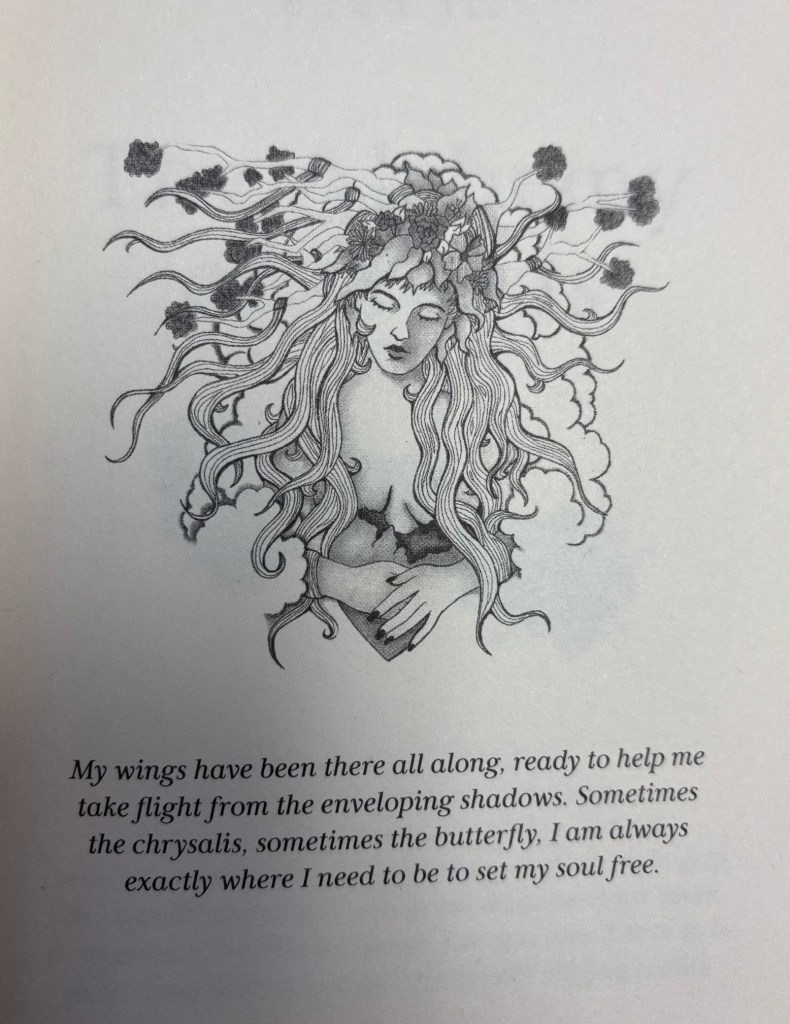
I am reading a book written by Monika Carless called, Transforming the Mother Wound. Near the beginning, she writes that “self-healing or assisted healing consists of several steps,” one of which is “creating safe space to explore the trauma” (Carless, 10).
I have been thinking about grief and the desire to disappear from people’s lives. When I was growing up, there were instances when my mother and I would get into disagreements and she would ask me if I wanted her to disappear.
It is an intense and impactful question that is augmented by the fact that her physical frame has indeed disappeared through death.
I appreciate John Locke’s popularized notion of tabula rasa, a Latin phrase for blank slate. Locke himself was one of the three great empiricists, a philosophical framework that posits sensory experience as our primary mode of acquiring information and knowledge about the world.
When I was young, I learned that disappearing is an option. I learned how to ghost and leave people’s lives without a second glance. And yet, it is only now that I feel a strong urge to reprogram my way of thinking.
The neuroplasticity of our brains means that this is possible. It is one thing to form a habit, another to pay attention to the moment when you are presented with the opportunity to choose a different action. It requires self-awareness, discipline, focus, and a willingness to change.
Hard emotions demand brevity. I am learning how to stand still in the face of them. I am learning how to trust myself enough to know that even if the ground may shift beneath my feet, I will be okay. I am developing inner fortitude and the realization of control that I have over my own character.
In this place here, I am learning how to take Carless’ advice and carve a space where I can explore what moves me. I have also started writing by hand in a beautiful journal that was gifted to me.
My journey is the process of becoming.
 STABILISE