In Part 1 of his book Either/Or, Søren Kierkegaard writes:
“Don’t you know that a midnight hour comes when everyone has to take off his mask?
Do you think life always lets itself be trifled with?
Do you think you can sneak off a little before midnight to escape this?
Or are you not terrified by it? I have seen men in real life who so long deceived others that at last their true nature could not reveal itself.
I have seen men who played hide-and-seek so long that at last in the end they could not find themselves.”
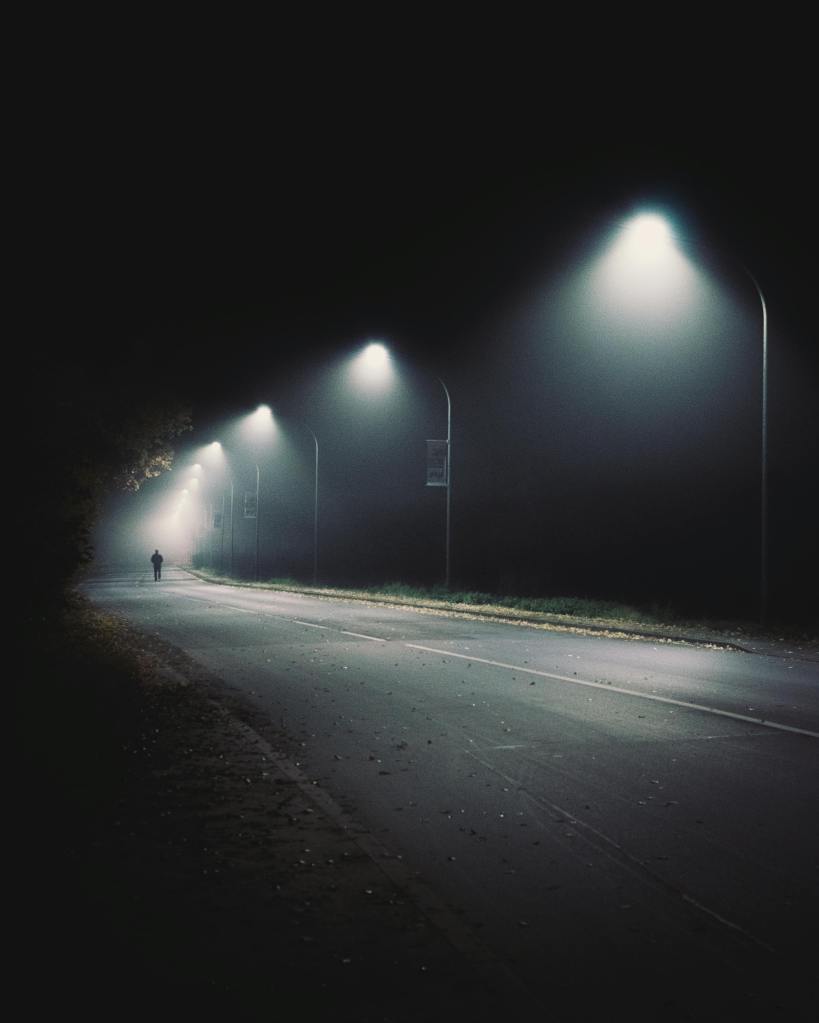
Kierkegaard’s words are striking because they encourage us to wonder: what does he mean by “the midnight hour?” When I read it, I think of the darkest part of night, a time in which one is typically left alone with one’s thoughts. One can approach the self head-on or avoid through distraction.
Today, social media has become a common distraction. The endless scroll can keep us from being alone with our thoughts and, at times, from engaging with life more directly — with nature, with loved ones, with ourselves. Social media did not exist in Kierkegaard’s time, but the point is that distractions come in many forms.
Perhaps the greatest tool against living in a distracted way is meditation. It encourages detachment from objects in the world and cultivates a free mind, a space where thoughts drift like clouds rather than being gripped. However, there is a part of me that believes meditation can itself become a distraction, likely reflecting my own restlessness with silence. The crux is that thoughts themselves are not the problem, but what one is thinking about.
When I read Kierkegaard’s passage, I notice how he refers to deception and playing hide-and-seek. In order to deceive oneself, there must be truths being avoided. I think of how people remain in jobs they dislike, mediocre relationships, superficial friendships, or otherwise engage with life in an inauthentic way. By asking about the midnight hour, Kierkegaard suggests there will come a time when we are called to be who we truly are, without the stories we tell ourselves or others.
When the midnight hour arrives, it is likely be painful. Similar to meditation, which emphasizes a clear mind, Kierkegaard calls for a mind that is purposefully aware. Meditation can help us cultivate this awareness, strengthening our capacity to notice and reflect on our thoughts, and ultimately acknowledge their impact on our lives.
There remains a component that is difficult to articulate: our characters are shaped by our actions. Over time, actions can make our characters feel set in stone. What Kierkegaard may be urging is recognition of our capacity for change. Just as past actions shaped who we are, we retain the ability to choose new actions, thereby altering the course of our lives.
In the end, the line that affects me most is: “Or are you not terrified by it?” In one line, Kierkegaard affirms the fleeting and fragile nature of life. He is asking us: if not now, when will we truly choose ourselves?
 STABILISE