
A significant part of recovering from a traumatic event is learning how to step outside the framework of pain. It sounds simple, but I am not sure that it is. If it was, then it wouldn’t have taken me from 2019 until now to heal from my first experience with psychosis. To hear voices in your head that do not exist is a tremendous experience. The hardest part of my journey has been learning how to trust my own mind again.
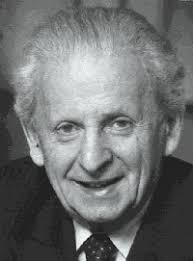
John F. Nash Jr., the Nobel Prize winner in Economics, suffered from schizophrenia for years before eventually finding his own way to live a stable life. He was institutionalized, offered antipsychotic medication, and insulin shock therapy. In his own words, he found his way when he “began to intellectually reject some of the delusionally influenced lines of thinking which had been characteristic of my orientation. This began, most recognizably, with the rejection of politically-oriented thinking as essentially a hopeless waste of intellectual effort.”
I find writing about my experiences with psychosis painful because I feel as though it makes me appear weak. When I read about people like John Nash or Mark Vonnegut however, I begin to find my footing. Real people suffer from real mental health concerns. In 1959, John Nash got up to make a lecture at Columbia University for the American Mathematical Society and it was incomprehensible. That is how the public began to understand that something was deeply wrong. Imagine that: a mathematical genius getting up to prove a mathematical hypothesis and inadvertently disclosing that he thought he was a part of a government conspiracy.
What I have learned from his experience is to cease self-judgment. There is no sense in crucifying myself for trusting voices that came from the same place as my rational ideas. It is okay to get it wrong sometimes, to make mistakes, to flounder. As Maya Angelou wrote, “But still, like dust, I’ll rise.”








 STABILISE