Disclaimer: It is important to note that STABILISE is a work in progress operated by an educated woman with lived experience with bipolar disorder and computer scientists interested in improving access to practical knowledge, medical professionals, and crisis responders. We are building a mobile application that is designed to track moods and analyse text so help can be provided sooner. For medical advice, please consult your family doctor or a trusted health care practitioner. If you believe you are in need of immediate medical assistance and live in North America, call 911. Otherwise, please reach out to the Lifeline at 988 (by phone or text).

Category: Books

  • On Pursuing the Whole Picture

    On Pursuing the Whole Picture

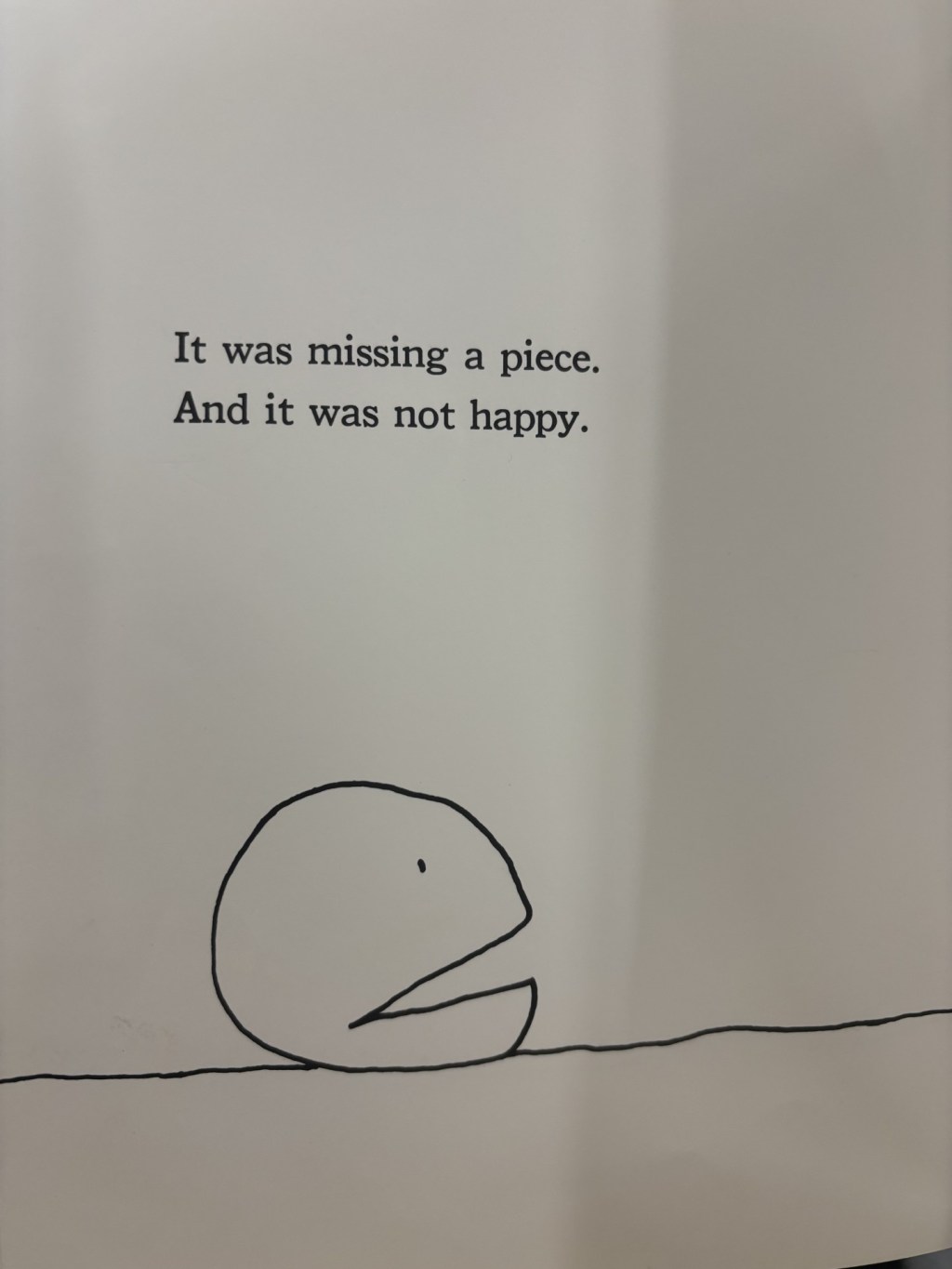
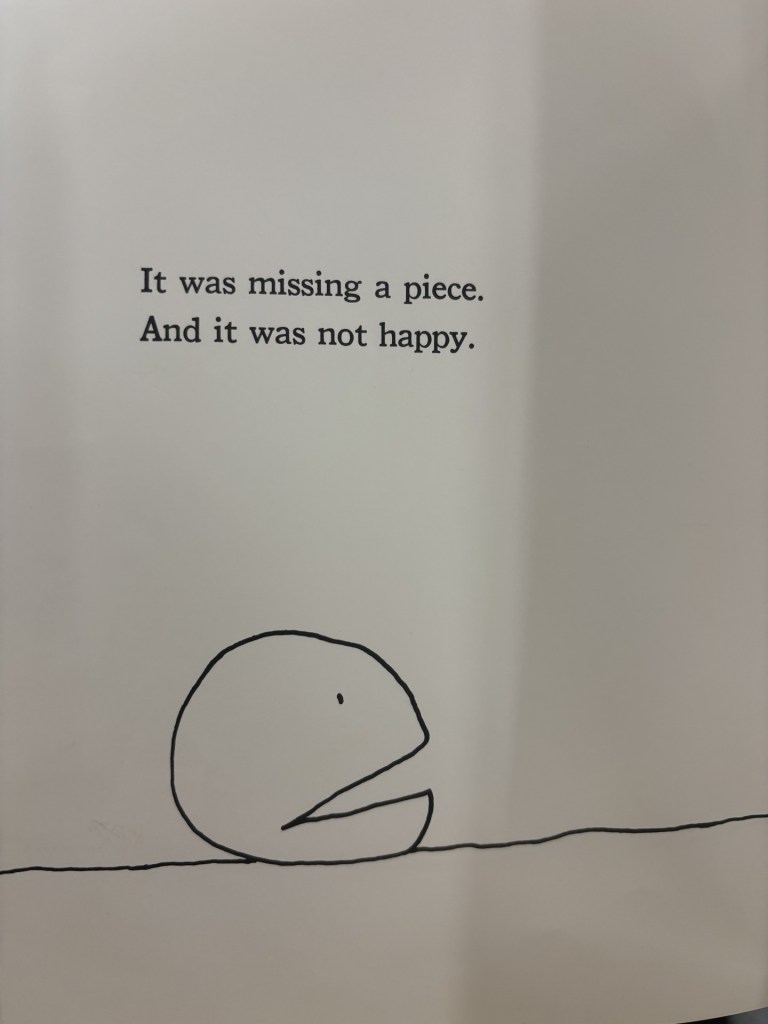
    Shel Silverstein, The Missing Piece

    If I were to ask you to imagine yourself as a landscape, what image would come to mind?

    In the past few days, I have been a stretch of cold similar to the Tundra. I have also been as volatile as the earth’s core.

    One minute, snow and ice. The next, molten iron and a variety of other elements.

    There is tremendous beauty in that versatility. My inner self can appear barren, void of everything but cold and wind. One blink and I become magma. The shift between the two is hopeful because it signals the potential for change. It also hints at how multifaceted human beings truly are.

    We are never just one thing, one idea, one side of the coin. And chances are, each of us has got a piece of us that appears to be missing.

    The beauty of reading children’s books as a woman in her 30s is that I can grasp subtleties while also activating my inner child. For the past few years, I have been obsessed with exploring my shadow self. It seems so mature to face the dark side, so elegant and sexy and deep.

    For a time, shadow work was an illuminating and essential process.

    I don’t know if I’m alone in saying this, but lately, I’ve been looking at my reflection and seeing the little girl I used to be. It helps that I have been navigating my fear of being on camera by taking selfie reels of me talking about some of the things I am thinking about.

    It also helps to read children’s books, like those written by Shel Silverstein and James & Kimberly Dean, because complex ideas are expressed with simple language.

    It’s that quest for simplicity that I crave, reminiscent of Richard Feynman who said that if it couldn’t be explained to a child, the person didn’t understand the concept well enough.

    The beauty of approaching inner child work is how it’s teaching me to approach my reflection with care and curiousity.

  • On Being Honest

    In the preface of Emmanuel Levinas’ book, Totality & Infinity, Yale professor John Wild writes,

    “But, according to Levinas, speaking becomes serious only when we pay attention to the other and take account of him and the strange world he inhabits.”

    There are moments when it is simpler to quote philosophy than it is to actually live it. I want to spend time discussing what it means to pay attention to another human being. A strong component is actively listening to what somebody has to say. This doesn’t necessitate agreement, but rather, an acknowledgment of the other as a person in the world who deserves to be heard.

    I would like to get better at this.

    My fascination with Levinas began in my final year of undergrad. I was introduced to him by a female professor who was teaching Philosophy of Religion. His book is dense and intricate, each page requiring me to read over them multiple times. It has been more than a decade since I got my degree and I still stumble over what he meant by the face-to-face encounter. From what I have gathered this far, it involves care and recognition of the other as an essential being in the world. It also requires lived experience.

    The difficulty I encounter is pausing before reacting. I can be mercurial, often speaking before thinking. I think what Levinas is requesting in his ethical framework is for human beings to be thoughtful in their approach of the other. It is more than kindness or care, but genuine acknowledgment of the shared humanness. When this acknowledgment is made, there is an active space for listening.

    While I am still in the process of reading through his book, I do want to mention that I believe this is a premeditated and perpetual process. That is, one must make a decision to approach others from this ethical framework at all times consistently and repeatedly. It is not a choice that happens once, but steadily throughout the course of each interaction. Here’s to hoping I strive towards that ideal and improve my understanding of his articulate concepts.

  • On the Visceral

    In her book, The Secret History, Donna Tartt writes,

    “Beauty is terror. Whatever we call beautiful, we quiver before it.”

    The act of quivering before anything implies that the person has been affected deeply. To be affected by an experience can be visceral, a word defined by Merriam-Webster as “felt in or as if in the internal organs of the body.” People can experience beauty and terror in many ways. For some, it is religious or spiritual in nature. For others, it is being in the presence of nature or a brilliant piece of art.

    Another interesting definition of visceral is that it is “not intellectual,” but rather, instinctive or relating to what a person feels in their gut. This instinctive, gut-level response is not limited to beauty or terror — it is also how emotions can manifest into mental states like mania and depression. Both are extreme states in which emotions are deeply felt, but can lack a rational framework. Communication with a trained professional or crisis responder is advised, as they can offer an objective interpretation of events and practical strategies, like exercises, techniques, or resources.

    When experiencing mania or depression, it is essential to ask: are my emotions grounded in truth? While it is valid to feel what a person feels, it is crucial to pause and verify whether the thoughts behind the emotions are rooted in reality. A visceral experience, whether of beauty or terror, can distort a person’s ability to gauge if their emotional experiences are proportionate to what is actually happening in the world.

    The power of Tartt’s prose is that she encourages the reader to contemplate deep philosophical questions. In mentioning the quiver, Tartt effectively illustrates how a person can be struck viscerally by an experience. By linking beauty with terror, Tartt captures the overwhelming intensity of such moments — and invites reflection on how to respond when we are caught off-guard by life’s rawest experiences. The challenge is not only to feel deeply, but maintain access to the rational part of ourselves that enables discernment.

    Source: Merriam-Webster

  • On Jewelry Making

    In her book, Women Who Run With the Wolves, Clarissa Pinkola Estés writes,

    “The Wild Woman knows that in creating, she claims her power. She reclaims what has been lost, forgotten, or silenced.”

    It takes courage and discipline to make art. It also requires research. I meant to write this blog post this morning, but I got wrapped up in reading different passages from female poets, novelists, and journalists. I was reading them because I needed inspiration. I came across the Wild Woman archetype, an idea explored by Clarissa.

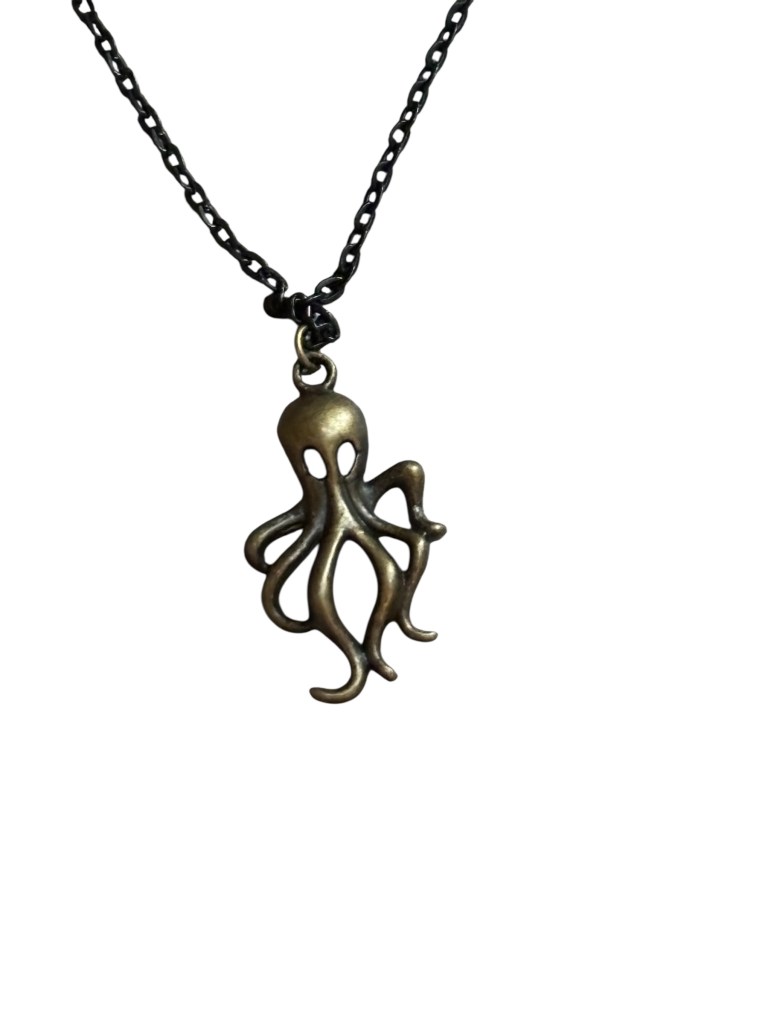
    Basically, the brunt of the book is an expression of how by accessing a woman’s intuition, she is able to express essential personal truths. In my work, I am interested in truth-telling and meaning-making. The primary reason why I make jewelry is because it is comforting to use my hands to create something that did not exist before I made it.

    There is something primal about art and creativity; namely, its capacity to contain and express multitudes. A beaded bracelet is not only beads slipped through an elastic string. It is an elucidation of a time – an event, an emotional experience, the inkling of an idea that came into fruition.

    I make jewelry because it allows me to stay focused, specifically when I am twisting eye hooks into little rings or figuring out exactly what a piece should look like. The physical component is what draws my attention. In writing, one typically says what one intends. Jewelry making is a way to channel an idea into a non-linguistic form, to give shape to intuition, and to reclaim a kind of personal power.

  • On Bipolar Disorder

    In her book, An Unquiet Mind: A Memoir of Moods and Madness, Kay Redfield Jamison writes,

    “Manic-depression distorts moods and thoughts, incites dreadful behaviors, destroys the basis of rational thought, and too often erodes the desire and will to live. It is an illness that is biological in its origins, yet one that feels psychological in the experience of it, an illness that is unique in conferring advantage and pleasure, yet one that brings in its wake almost unendurable suffering and, not infrequently, suicide.”

    I read her book for the first time when I was living in Dublin back in 2017. There was something profoundly beautiful about seeing her perspective on life with bipolar disorder. At the time, I suspected that I may struggle with it as well, but I did not receive a formal diagnosis until September 2023.

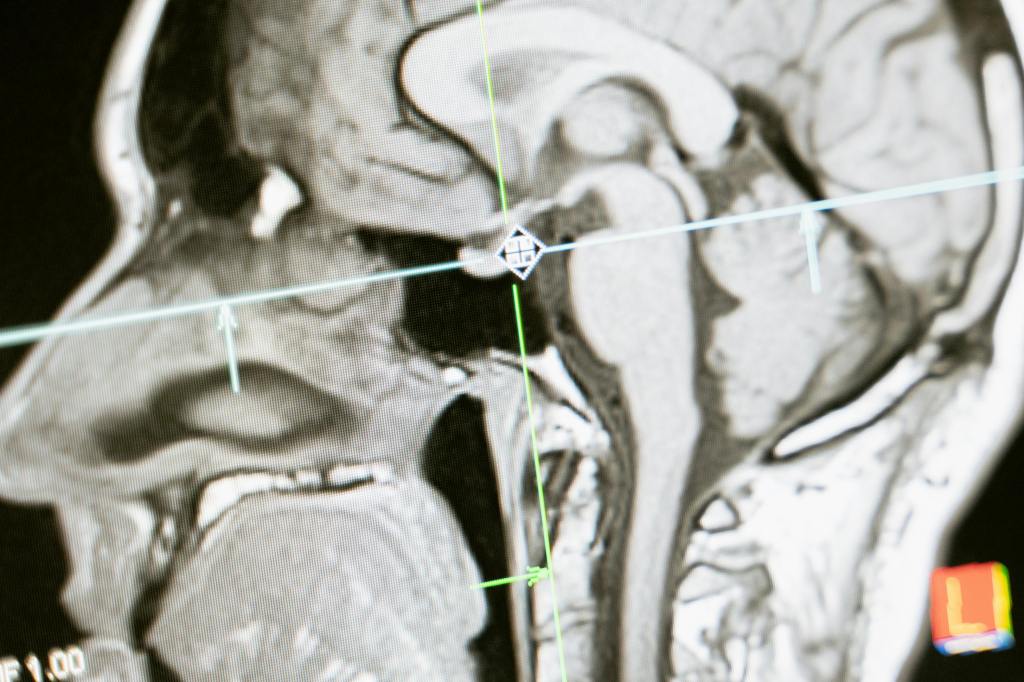
    According to the Depression and Bipolar Support Alliance (DBSA), bipolar disorder is “a treatable mental health condition marked by extreme changes in mood, thought, energy, and behavior” (Bipolar Disorder – Depression and Bipolar Support Alliance, 2025). It can be a scary experience, one that requires the lucid monitoring of mental and emotional states. It is also interesting because of how mania can encourage a deep sense of creativity and drive.

    When I am manic, I am entranced by the world. I experience flights of ideas, which I have learned how to convert into art. I like to walk often, listen to music, and translate my intense emotions. They can feel enormous. I am mercurial by nature, shapeshifting through moods. When I am depressed, I am drawn to death and suicidal ideation. It becomes necessary to speak truthfully.

    Jamison writes how “there is a particular kind of pain, elation, loneliness, and terror involved in this kind of madness.” The loneliness associated with living with bipolar disorder is primarily due to the inability to share what it is like with another human being. Many can write about it, but there is an absence of being able to share how it feels to live with it. The highs are tremendous, the lows are remarkably isolating.

    The extremes have encouraged me to adopt a number of different coping strategies. I am a proponent of talk therapy, both with medical professionals, crisis responders, and friends. I make jewelry, an excellent activity because it requires focus. Writing is particularly helpful because it allows me to slow the world down, as does painting. The creative process is helpful because it allows me to see an idea through from start to finish.

    Self-expression is a pivotal aspect of dealing with having bipolar disorder. It can feel tremendous to experience emotions at a high frequency. There is a need to express their magnitude, if only to ensure that they do not remain stored within the body. There is nothing worse for depression than to feel alone. It helps to read books, like Jamison’s An Unquiet Mind or The Eden Express by Mark Vonnegut. Knowledge is essential when learning how to navigate living with a mental illness because it increases the odds of a person surviving and thriving.

    Source: Depression and Bipolar Support Alliance – Bipolar Disorder