Disclaimer: It is important to note that STABILISE is a work in progress operated by an educated woman with lived experience with bipolar disorder and computer scientists interested in improving access to practical knowledge, medical professionals, and crisis responders. We are building a mobile application that is designed to track moods and analyse text so help can be provided sooner. For medical advice, please consult your family doctor or a trusted health care practitioner. If you believe you are in need of immediate medical assistance and live in North America, call 911. Otherwise, please reach out to the Lifeline at 988 (by phone or text).

Author: Fatima Zaghloul

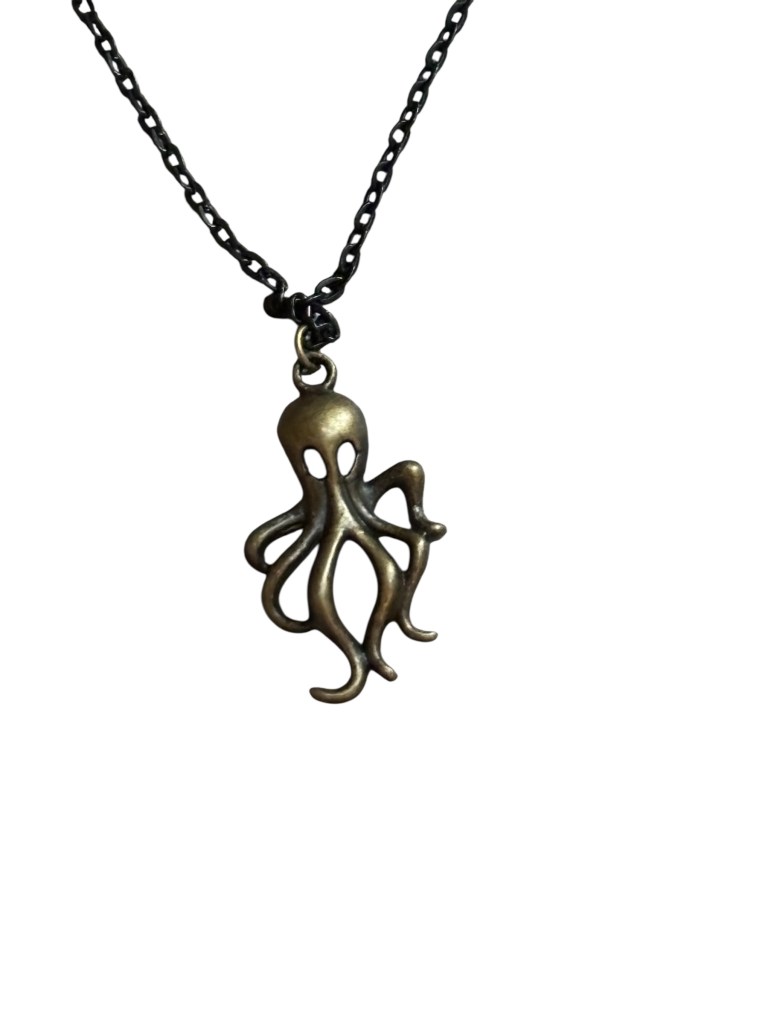
  • On Jewelry Making

    In her book, Women Who Run With the Wolves, Clarissa Pinkola Estés writes,

    “The Wild Woman knows that in creating, she claims her power. She reclaims what has been lost, forgotten, or silenced.”

    It takes courage and discipline to make art. It also requires research. I meant to write this blog post this morning, but I got wrapped up in reading different passages from female poets, novelists, and journalists. I was reading them because I needed inspiration. I came across the Wild Woman archetype, an idea explored by Clarissa.

    Basically, the brunt of the book is an expression of how by accessing a woman’s intuition, she is able to express essential personal truths. In my work, I am interested in truth-telling and meaning-making. The primary reason why I make jewelry is because it is comforting to use my hands to create something that did not exist before I made it.

    There is something primal about art and creativity; namely, its capacity to contain and express multitudes. A beaded bracelet is not only beads slipped through an elastic string. It is an elucidation of a time – an event, an emotional experience, the inkling of an idea that came into fruition.

    I make jewelry because it allows me to stay focused, specifically when I am twisting eye hooks into little rings or figuring out exactly what a piece should look like. The physical component is what draws my attention. In writing, one typically says what one intends. Jewelry making is a way to channel an idea into a non-linguistic form, to give shape to intuition, and to reclaim a kind of personal power.
  • On Bipolar Disorder

    In her book, An Unquiet Mind: A Memoir of Moods and Madness, Kay Redfield Jamison writes,

    “Manic-depression distorts moods and thoughts, incites dreadful behaviors, destroys the basis of rational thought, and too often erodes the desire and will to live. It is an illness that is biological in its origins, yet one that feels psychological in the experience of it, an illness that is unique in conferring advantage and pleasure, yet one that brings in its wake almost unendurable suffering and, not infrequently, suicide.”

    I read her book for the first time when I was living in Dublin back in 2017. There was something profoundly beautiful about seeing her perspective on life with bipolar disorder. At the time, I suspected that I may struggle with it as well, but I did not receive a formal diagnosis until September 2023.

    According to the Depression and Bipolar Support Alliance (DBSA), bipolar disorder is “a treatable mental health condition marked by extreme changes in mood, thought, energy, and behavior” (Bipolar Disorder – Depression and Bipolar Support Alliance, 2025). It can be a scary experience, one that requires the lucid monitoring of mental and emotional states. It is also interesting because of how mania can encourage a deep sense of creativity and drive.

    When I am manic, I am entranced by the world. I experience flights of ideas, which I have learned how to convert into art. I like to walk often, listen to music, and translate my intense emotions. They can feel enormous. I am mercurial by nature, shapeshifting through moods. When I am depressed, I am drawn to death and suicidal ideation. It becomes necessary to speak truthfully.

    Jamison writes how “there is a particular kind of pain, elation, loneliness, and terror involved in this kind of madness.” The loneliness associated with living with bipolar disorder is primarily due to the inability to share what it is like with another human being. Many can write about it, but there is an absence of being able to share how it feels to live with it. The highs are tremendous, the lows are remarkably isolating.

    The extremes have encouraged me to adopt a number of different coping strategies. I am a proponent of talk therapy, both with medical professionals, crisis responders, and friends. I make jewelry, an excellent activity because it requires focus. Writing is particularly helpful because it allows me to slow the world down, as does painting. The creative process is helpful because it allows me to see an idea through from start to finish.

    Self-expression is a pivotal aspect of dealing with having bipolar disorder. It can feel tremendous to experience emotions at a high frequency. There is a need to express their magnitude, if only to ensure that they do not remain stored within the body. There is nothing worse for depression than to feel alone. It helps to read books, like Jamison’s An Unquiet Mind or The Eden Express by Mark Vonnegut. Knowledge is essential when learning how to navigate living with a mental illness because it increases the odds of a person surviving and thriving.

    Source: Depression and Bipolar Support Alliance – Bipolar Disorder

  • On Being a Woman in the World

    Audre Lorde, a Black, lesbian, mother, activist, and poet, is reported to have said,

    “Once you start to speak, people will yell at you. They will interrupt you, put you down and suggest it’s personal. And the world won’t end. And the speaking will get easier and easier. And you will find you have fallen in love with your own vision, which you may never have realized you had… And at last you’ll know with surpassing certainty that only one thing is more frightening than speaking your truth. And that is not speaking.”

    When I am feeling as though my tongue has been cut out, I return to Audre because I think it is difficult to be a woman in the world. There is a perpetual sense of danger. I used to think it was my imagination but there is strong evidence for this.

    The hardest part of being a woman is the consistent sense that I am an imposter. I cannot remember when this began. Perhaps it has existed my entire life so there is no clear delineation. I am not alone in this feeling. I need to reassure myself of that fact. A friend once told me that she struggles with Imposter Syndrome as well. This internal doubt is compounded by the constant reminders of how unsafe the world can be for women.

    Often enough, I feel the need to double or triple check the facts. I doubt the veracity of my opinions. Sometimes it takes a fourth or fifth look before I trust that what I say is true.

    This doubt doesn’t exist in a vacuum; it lives alongside the reality that the safety of women is constantly under threat. The other day, I watched a documentary series where a woman, Samantha Josephson, thought that she was getting into the Uber she ordered. She was abducted and murdered by the male driver who had been circling around, observing her and noticing that she was waiting for a ride. Her parents began the “What’s My Name?” campaign that urges riders to verify the license plate and ask drivers “What’s my name?” before entering a vehicle.

    Throughout my life, I have heard countless stories about women who are abused. I am thinking about the missing and murdered Indigenous women, Malala Yousafzai, and Katie Piper. I am thinking about them and how Audre asked, “What’s the worst that could happen to me if I tell this truth?” She advanced the notion that it is necessary for us to speak, to tell our truths, to declare that we exist. She said that “our speaking out will permit other women to speak, until laws are changed and lives are saved and the world is altered forever.”

  • On Love

    In his book, The Symposium, Plato writes,

    “… each of us when separated, having one side only, like a flat fish, is but the indenture of a man, and he is always looking for his other half.”

    The Symposium is fundamentally a book about love, a series of speeches designed to encourage thought about what love means. The quote is from Aristophanes.

    I remember reading The Symposium for the first time during my undergrad. I was astounded by the variety of perspectives on love. I was particularly struck by Aristophanes and Socrates.

    In the book, Socrates advances the notion that love draws us closer to the divine. When we love one, we are encouraged to love the whole of humanity, which leads us to the divine circuit of virtues.

    He argues that when we love a single individual, we must admit that those qualities are not particular to that individual. Once conceded, we expand our perspective to include others, eventually ending up loving the virtues themselves. There is something gorgeous about his theories, if only because they encourage the reader to think deeply.

    The reason why I like Aristophanes take is because he emphasizes the impact of the search. Often enough, I feel as though I am searching for something. I no longer believe it is a person.

    Being a believer in God is difficult. It is not the act of believing that is difficult, but rather, the consistent worry that I will deviate from what is moral. To be moral is to live a good life, an Aristotelian idea. Well, it is a feature shared by the ancients. They were preoccupied with the question, What does it mean to live well?

    When I think about what it is I am searching for, I would say it is a profound sense of peace. I mean, the peace I saw when I was looking at my mother who passed away.

    At her funeral, I leaned over to my uncle and said, “She looks like she knows something we don’t.”

    I’ve never forgotten that. Two years and I still feel her breathing beside me.

    Maybe the love we search for, the missing half, are really our parents, our friends, the person we saw on the street once.

  • On Prayer

    In her book, Gravity & Grace, Simone Weil writes,

    “Absolutely unmixed attention is prayer.”

    I have not read the book in full yet, only snippets here and there. But Simone Weil appears to be a fantastic woman, full of genuine and thoughtful insights. I read that when she passed away, it was likely due to the fast she was doing in solidarity against the Nazi-occupied territories.

  • On Art

    In her book, On Photography, Susan Sontag writes,

    “All photographs are memento mori. To take a photograph is to participate in another person’s (or thing’s) mortality, vulnerability, mutability. Precisely by slicing out this moment and freezing it, all photographs testify to time’s relentless melt. Photography is the inventory of mortality. It preserves the look of things, the way they have changed, the way they will never change again.”

    Note: Memento mori is Latin for, “Remember you will die.”

    It is a Stoic tradition to contemplate death, to keep it close long enough to feel its inevitability. Art is one of those activities where the artist is required to suspend judgment of their work long enough to create. It is in the act of creating that a person can evaluate how they feel about a subject. Often times, the subject is an emotional experience.

    Sontag makes an interesting point when she refers to how photographs are a testament to “time’s relentless melt.” When I create art, I do it because I am trying to understand a subject like death, as well as capture time. Maybe capture is the wrong word. Maybe what I mean is that I am trying to declare that a moment existed. Life is fleeting.

    Currently, I am learning how to make videos for Stabilise’s Instagram and TikTok. The process is long. The process is teaching me how to be patient and how to step outside of my shell. It is also teaching me how to use video editing software and purchase music again, a novel act in the face of music streaming platforms. In order to use iTunes in iMovie, you need to purchase the songs. I am incorporating clips that move me, both my own and others. I am also learning how to not take algorithms personally.

    The creative process for social media is unique. When I make tactile art, specifically memory boxes or abstract pieces on canvas, I am able to feel the materials I am using. I see the paint on my hands and sweaters. There is physical evidence that I have done something in the world. Virtual art in the form of videos, reels, stories, or posts are different. They feel as though they do not really exist until I open my phone, a digital version of Schrodinger’s Cat.

    Art seems to be the “inventory of mortality” that Sontag describes. Whether it’s virtual or tactile, it serves as a commentary on what it means to be a human being in the world. Even the simplest Instagram post is a declaration of existence. It is as though people are saying, “Hello, world! This is me.” I think that is why it can hurt when companies like Meta threaten the integrity of its everyday users who do not have a strong following. I remember when Instagram first began: hashtags worked and the posts appeared chronologically.

    The truth is what it has often been: money changes people. The bigger the corporation, the more profit-driven they become. It is also about the sheer magnitude of posts and people that occupy social media platforms. I digress. This began as a post about art and I ended up writing about social media. Perhaps this is because I think social media is an art form in and of itself.

    To willfully engage with the world is a substantial act. It is a footprint in the sand, a marker of location, a finger on the trigger of a camera.

  • On the Midnight Hour

    In Part 1 of his book Either/Or, Søren Kierkegaard writes:

    “Don’t you know that a midnight hour comes when everyone has to take off his mask?
    Do you think life always lets itself be trifled with?
    Do you think you can sneak off a little before midnight to escape this?
    Or are you not terrified by it? I have seen men in real life who so long deceived others that at last their true nature could not reveal itself.
    I have seen men who played hide-and-seek so long that at last in the end they could not find themselves.”

    Kierkegaard’s words are striking because they encourage us to wonder: what does he mean by “the midnight hour?” When I read it, I think of the darkest part of night, a time in which one is typically left alone with one’s thoughts. One can approach the self head-on or avoid through distraction.

    Today, social media has become a common distraction. The endless scroll can keep us from being alone with our thoughts and, at times, from engaging with life more directly — with nature, with loved ones, with ourselves. Social media did not exist in Kierkegaard’s time, but the point is that distractions come in many forms.

    Perhaps the greatest tool against living in a distracted way is meditation. It encourages detachment from objects in the world and cultivates a free mind, a space where thoughts drift like clouds rather than being gripped. However, there is a part of me that believes meditation can itself become a distraction, likely reflecting my own restlessness with silence. The crux is that thoughts themselves are not the problem, but what one is thinking about.

    When I read Kierkegaard’s passage, I notice how he refers to deception and playing hide-and-seek. In order to deceive oneself, there must be truths being avoided. I think of how people remain in jobs they dislike, mediocre relationships, superficial friendships, or otherwise engage with life in an inauthentic way. By asking about the midnight hour, Kierkegaard suggests there will come a time when we are called to be who we truly are, without the stories we tell ourselves or others.

    When the midnight hour arrives, it is likely be painful. Similar to meditation, which emphasizes a clear mind, Kierkegaard calls for a mind that is purposefully aware. Meditation can help us cultivate this awareness, strengthening our capacity to notice and reflect on our thoughts, and ultimately acknowledge their impact on our lives.

    There remains a component that is difficult to articulate: our characters are shaped by our actions. Over time, actions can make our characters feel set in stone. What Kierkegaard may be urging is recognition of our capacity for change. Just as past actions shaped who we are, we retain the ability to choose new actions, thereby altering the course of our lives.

    In the end, the line that affects me most is: “Or are you not terrified by it?” In one line, Kierkegaard affirms the fleeting and fragile nature of life. He is asking us: if not now, when will we truly choose ourselves?

  • The Introduction

    Welcome to Stabilise.

    Stabilise is a human-led virtual project designed to emphasize the importance of meaning-making. It is about sharing different philosophical and psychological ideas with the hope of emphasizing how theoretical frameworks can provide clarity for emotional experiences.

    In our time together, I intend to write about what it means to be a human being in the world. I will write about nostalgia, how a single whiff of perfume can inspire a memory or a series of memories. I will discuss Emmanuel Levinas and his concept of the face-to-face encounter. I will explore intense topics, like death and how it feels to lose a parent. When doing all of these things, I will attempt to navigate through them with a philosophical lens.

    Ultimately, it is my goal to illustrate how philosophy and writing about ideas and emotions can strengthen one’s constitution long enough to stabilise.